SpinWheel
How to Play Snakes and Ladders
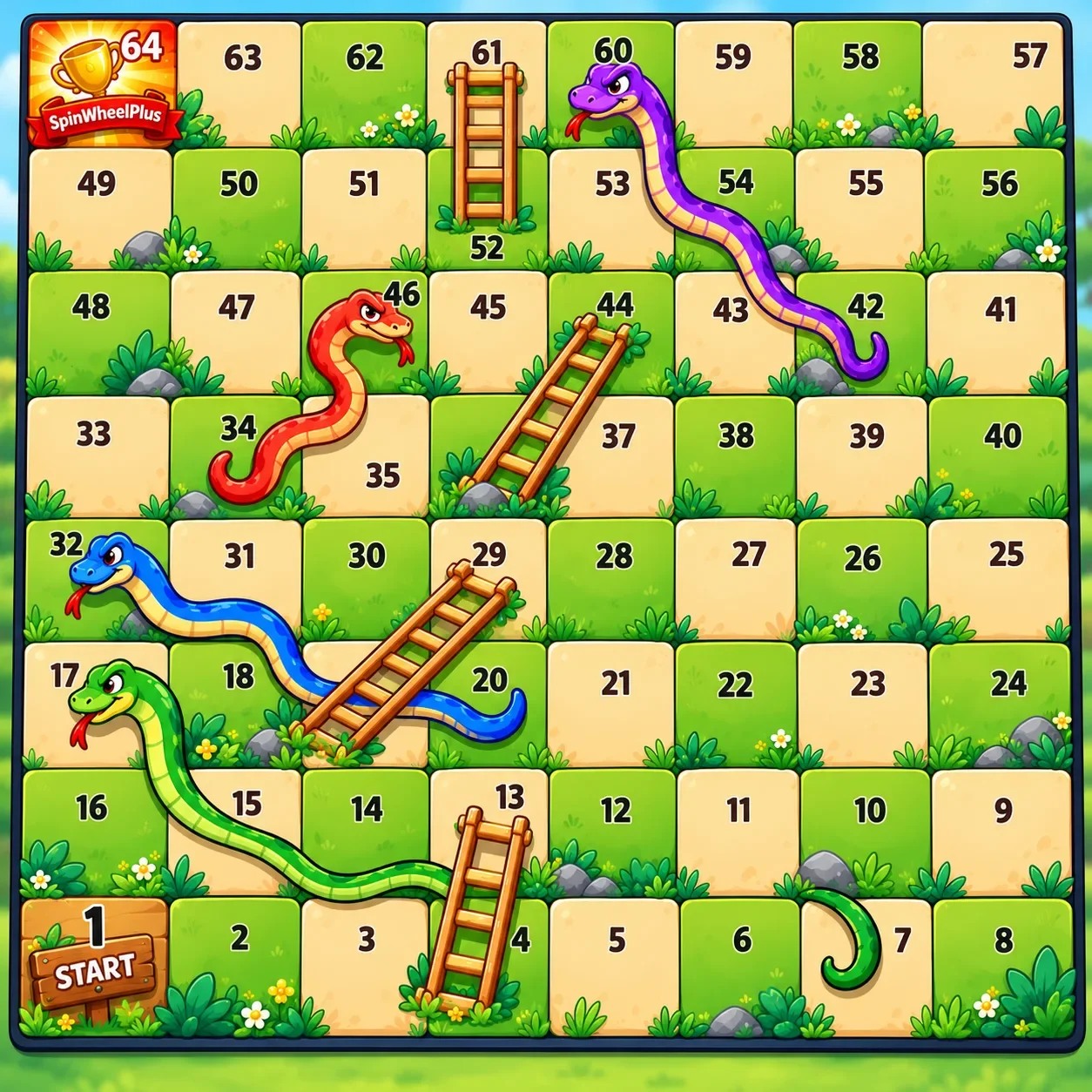
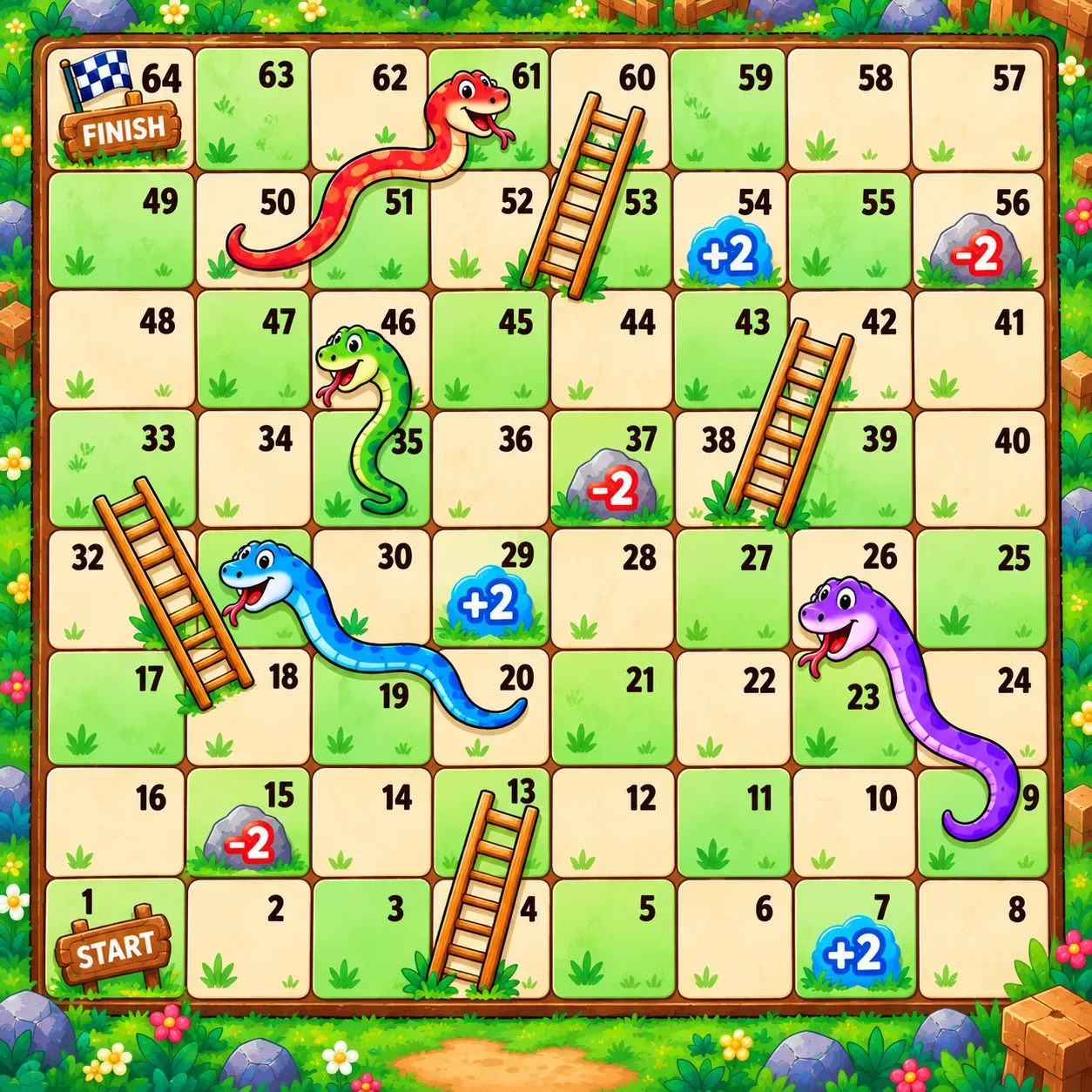
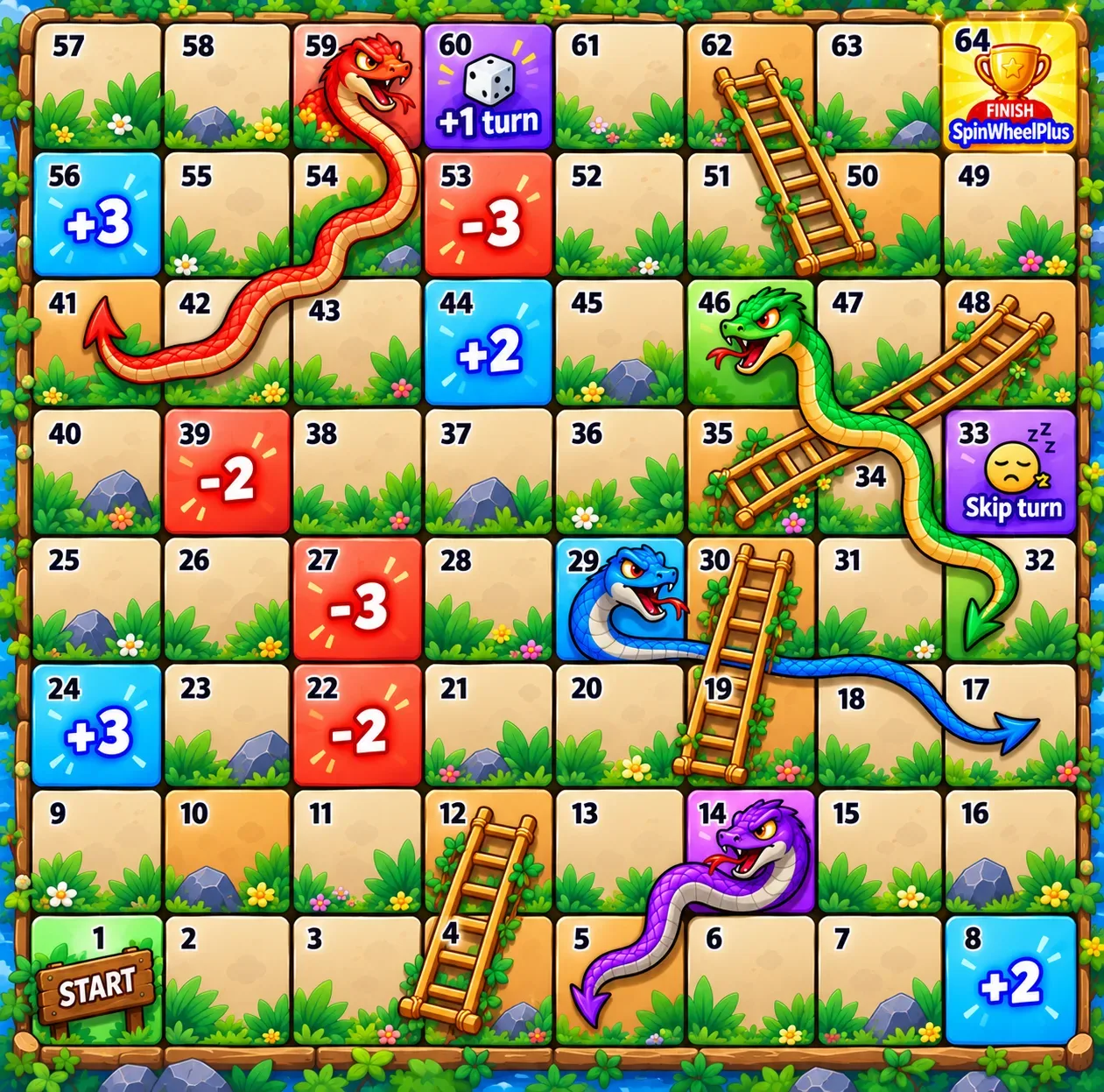
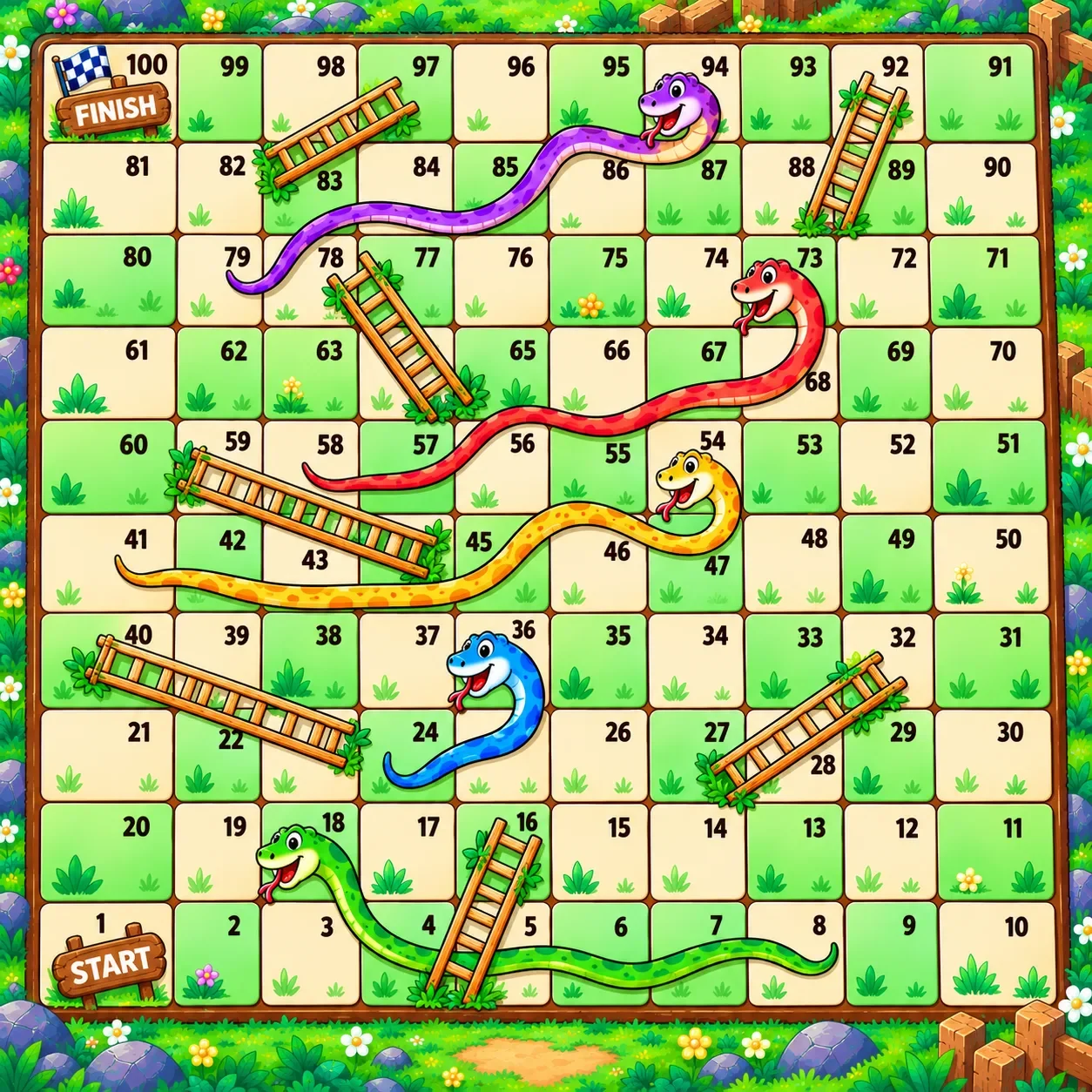
Nine boards for kids playing together, or for adults with a spare hour. These rules are for these boards. Print or draw one, and roll the die on this page.
By SpinWheelPlus Team
9 min read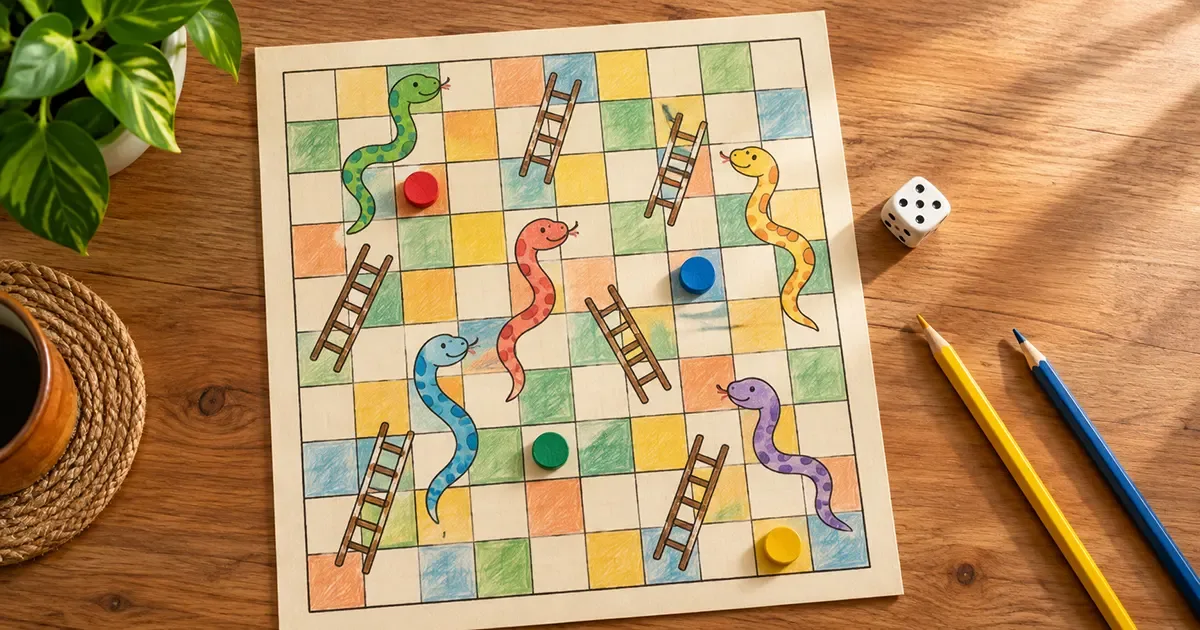
I drew these nine boards for kids who sit down and play together, and for adults who have a spare hour. The rules below are for these boards. You can print a map. You can also draw one. The pictures are references, so copy a board or change the snakes, the ladders, and the numbers.
A real die is optional. Roll the one below and leave the phone in the middle of the table.
You spend the time drawing, then you play, and luck picks the winner. A bad snake or a long ladder gives everyone something to talk about. That is the game I wanted.
What you need
Two or more people. Kids and adults can play, and there is no maximum. One token each. A coin or a button is enough. One board, printed or drawn on paper.
Use one six-sided die. To finish faster, use two and move the total. With one die, a 6 gives you another roll. With two dice, another roll comes only when both show 6, a total of 12.
If that box does not show, roll dice on another screen and keep the board in front of you.
How we play
- Everyone rolls once. The highest roll goes first. Roll again to break a tie.
- Put the tokens on START, before square 1.
- Roll one die and move that many squares. The bottom row goes left to right. The next row goes right to left. Rows keep alternating up to the last square.
- Do what the square says, then keep going until you land on a plain square. If a sign sends you to a square you already used this turn, stop.
- A 6 moves you six squares. After the signs are finished, roll again. With two dice, roll again only on 12. Each +1 turn square you land on gives you another roll too.
- Two tokens can share a square.
- Land exactly on the last square to win. If the roll is too big, stay where you are.
What the pictures mean
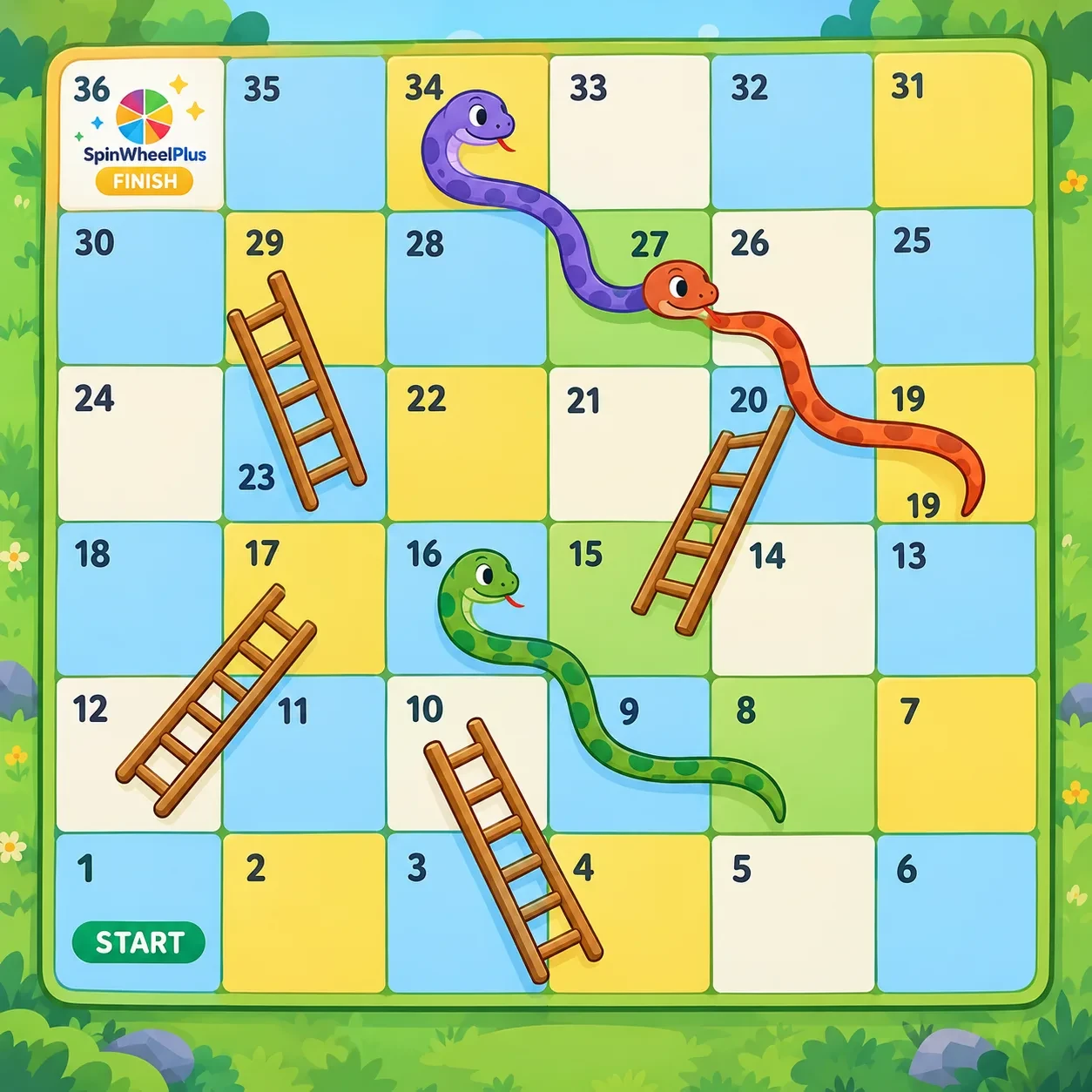
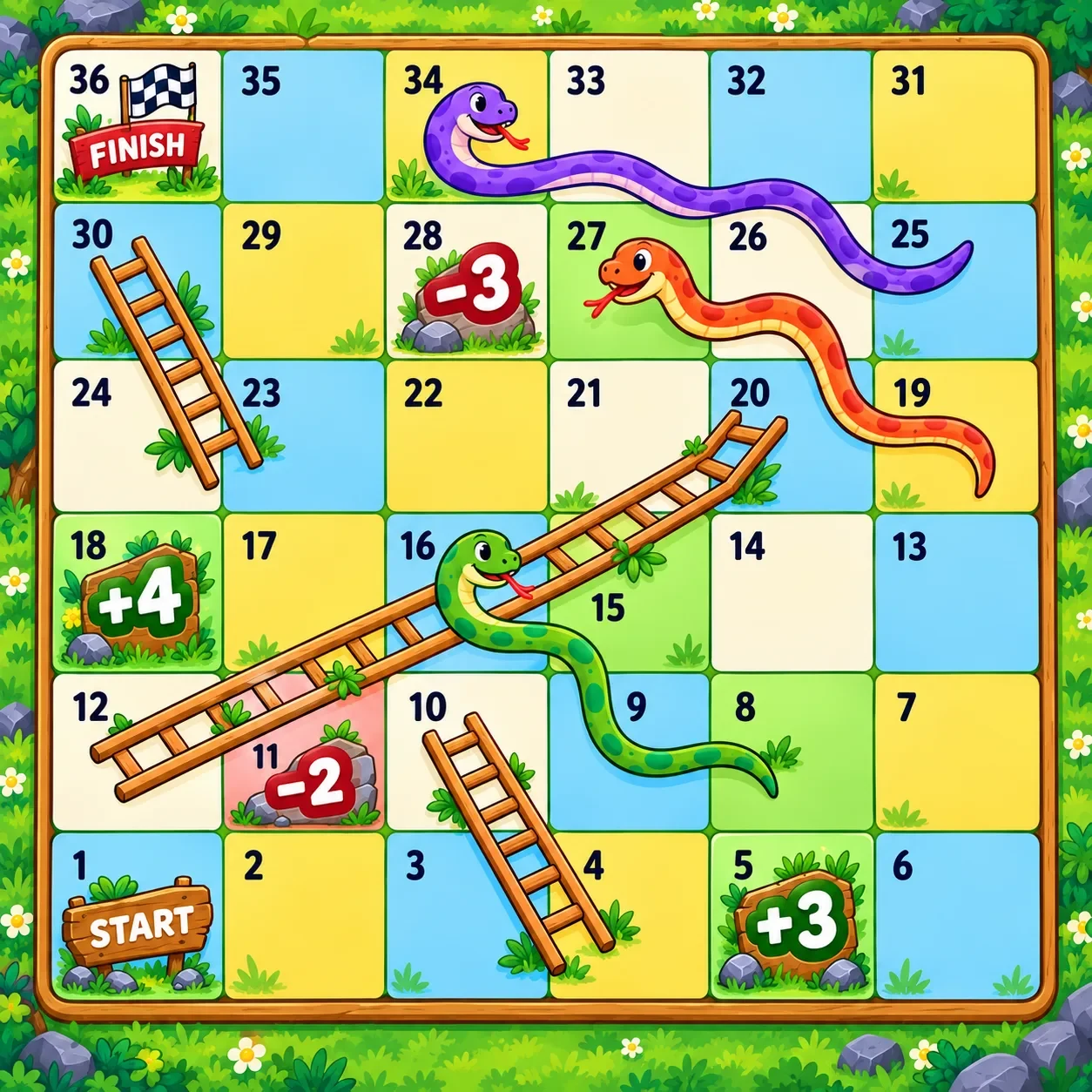
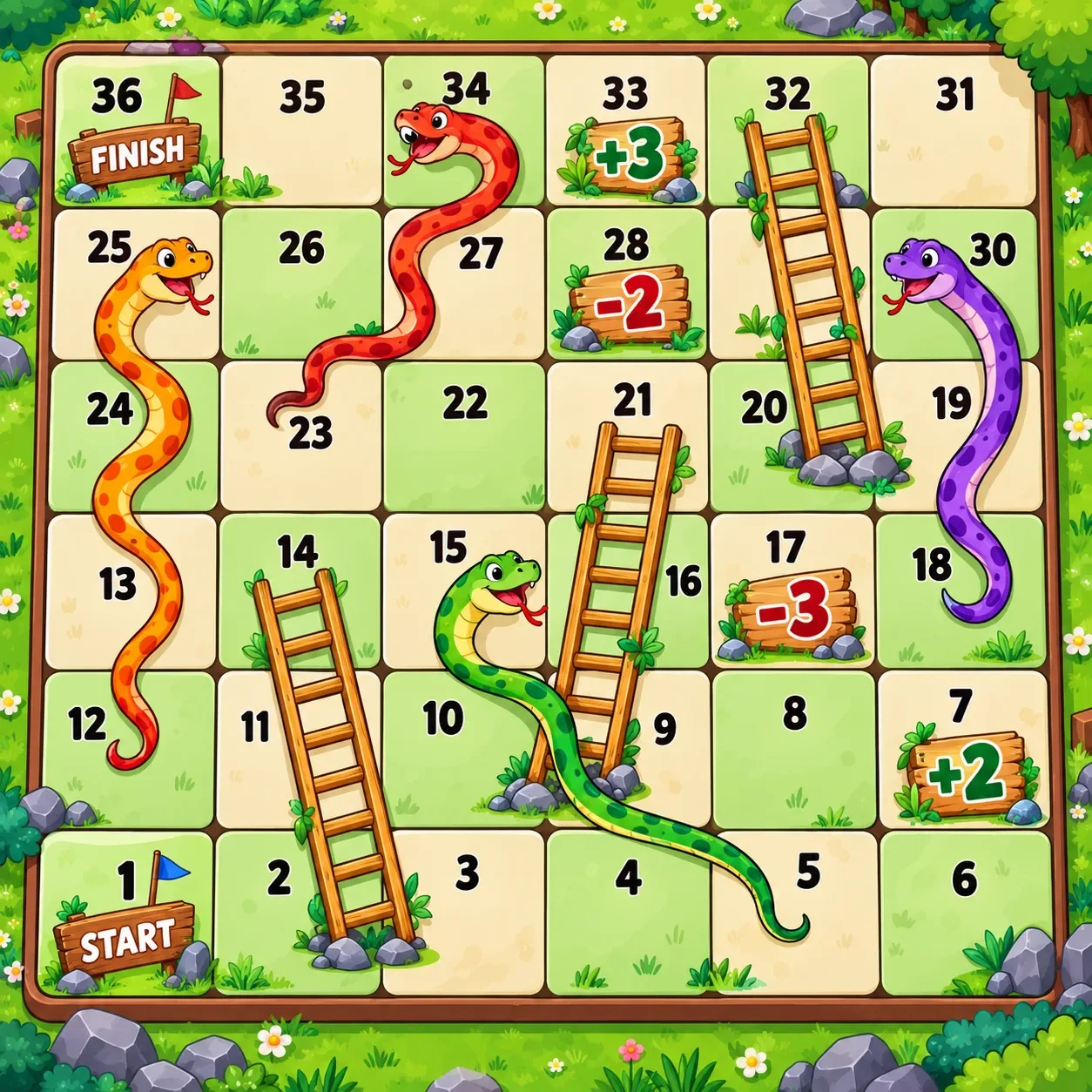
Only the head of a snake slides you down to its tail. Only the bottom of a ladder climbs to the top. Stepping over them does nothing.
A square with a sign moves you again along the path. You will see +2, +3, +4, -2, or -3 on the boards that draw them. Easy boards do not. Read the number on that square. If a plus would pass the last square, ignore it and stay. If a minus would pass START, stop on square 1.
Skip turn and +1 turn are part of the same rules. Easy boards do not draw them. They are on the hard 64-square board and the hard 100-square board. Skip turn means you miss one turn after the extra rolls from this visit are done. +1 turn means one more roll.
Pick a board
Six by six is 36 squares, and it is the short game. Eight by eight is 64. Ten by ten is 100, and it takes longer. Easy boards are snakes and ladders. Normal boards add the signed squares. Hard boards are the crowded ones.
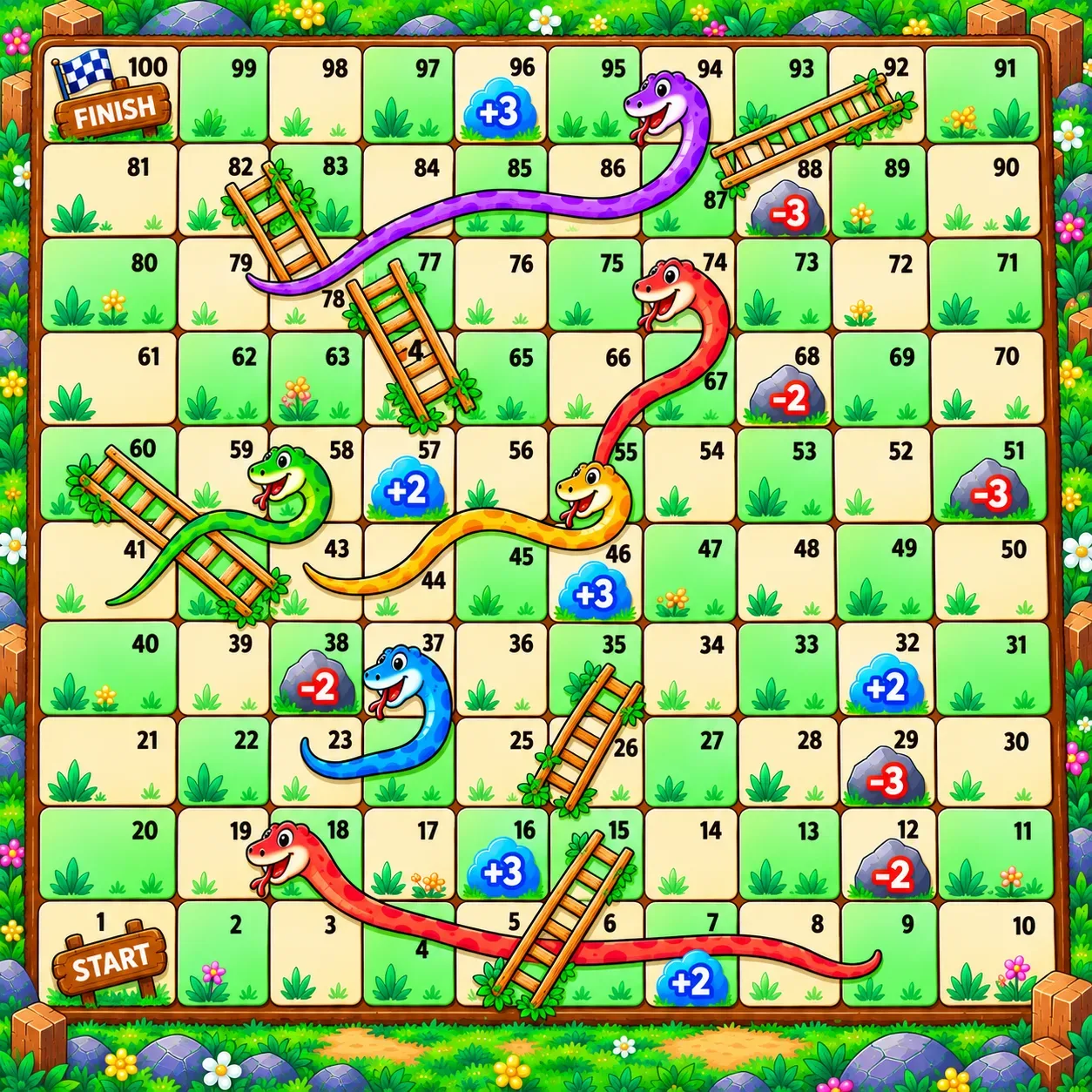
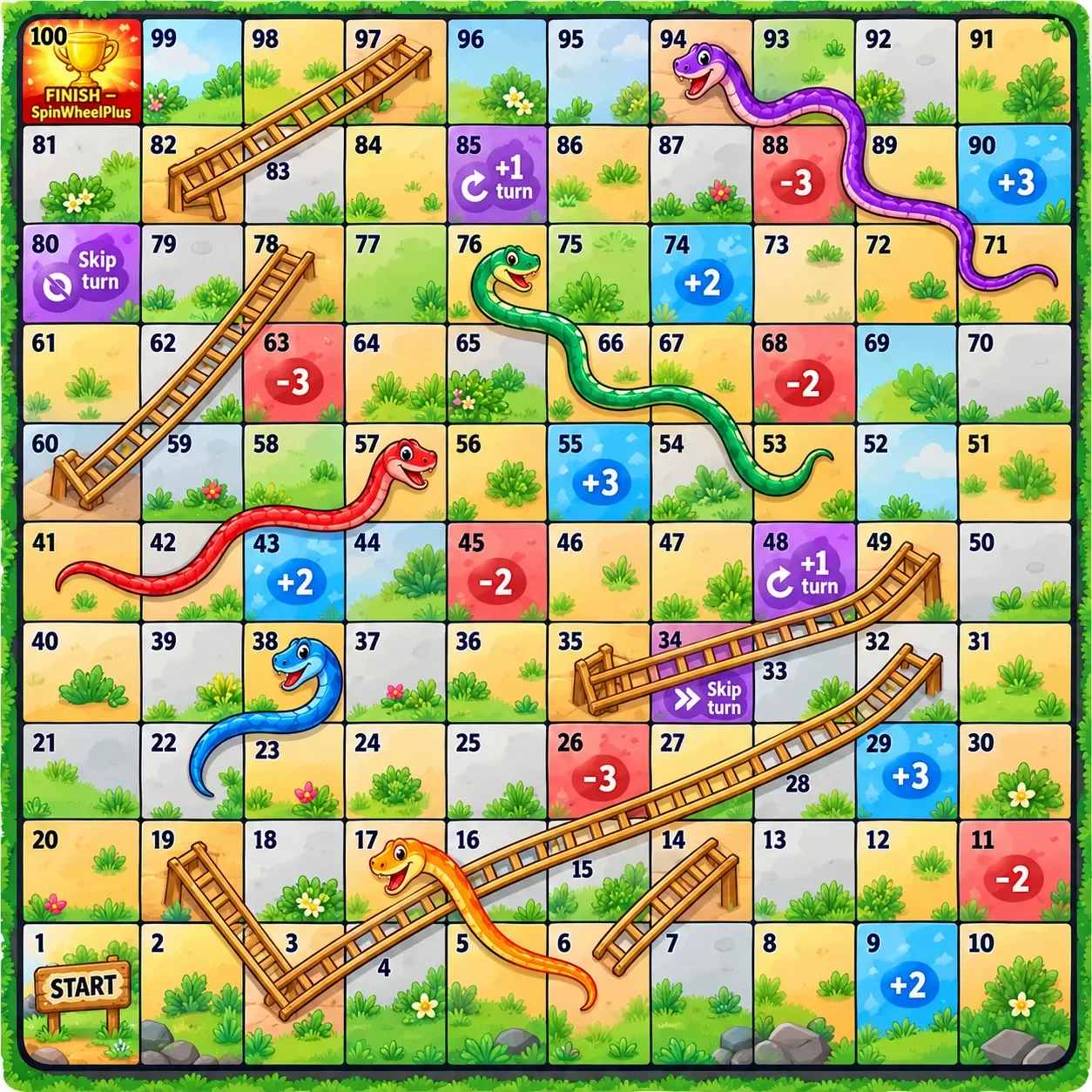
Draw the next one
Print a board and play it as drawn, or sketch a new grid and move things around. Shift a snake. Add a +2. A different drawing plays differently, which is why there are nine.
Drawing is part of sitting together, then the die takes over. You talk about the turn you just had. If nobody wants to draw tonight, play easy dice games with the same die and skip the board.